Drywall Repair in Fort Worth, TX
HouseBench handles drywall repair in Fort Worth, TX for the damage that comes with everyday living: holes left by TV mounts and wall anchors, doorknob dents, cracked seams, and sections cut out or stained during a leak. We patch, tape, finish, and blend the texture so the wall is ready for paint.
Send photos and rough measurements, and we confirm the repair scope and your quote before any work starts. That way you can weigh us against other drywall contractors in Fort Worth with the scope and the price already in hand.
Drywall and Sheetrock Repair Services in Fort Worth
Sheetrock is a brand name for drywall, much like Kleenex is for tissues, so whatever you call it, the repair is the same.
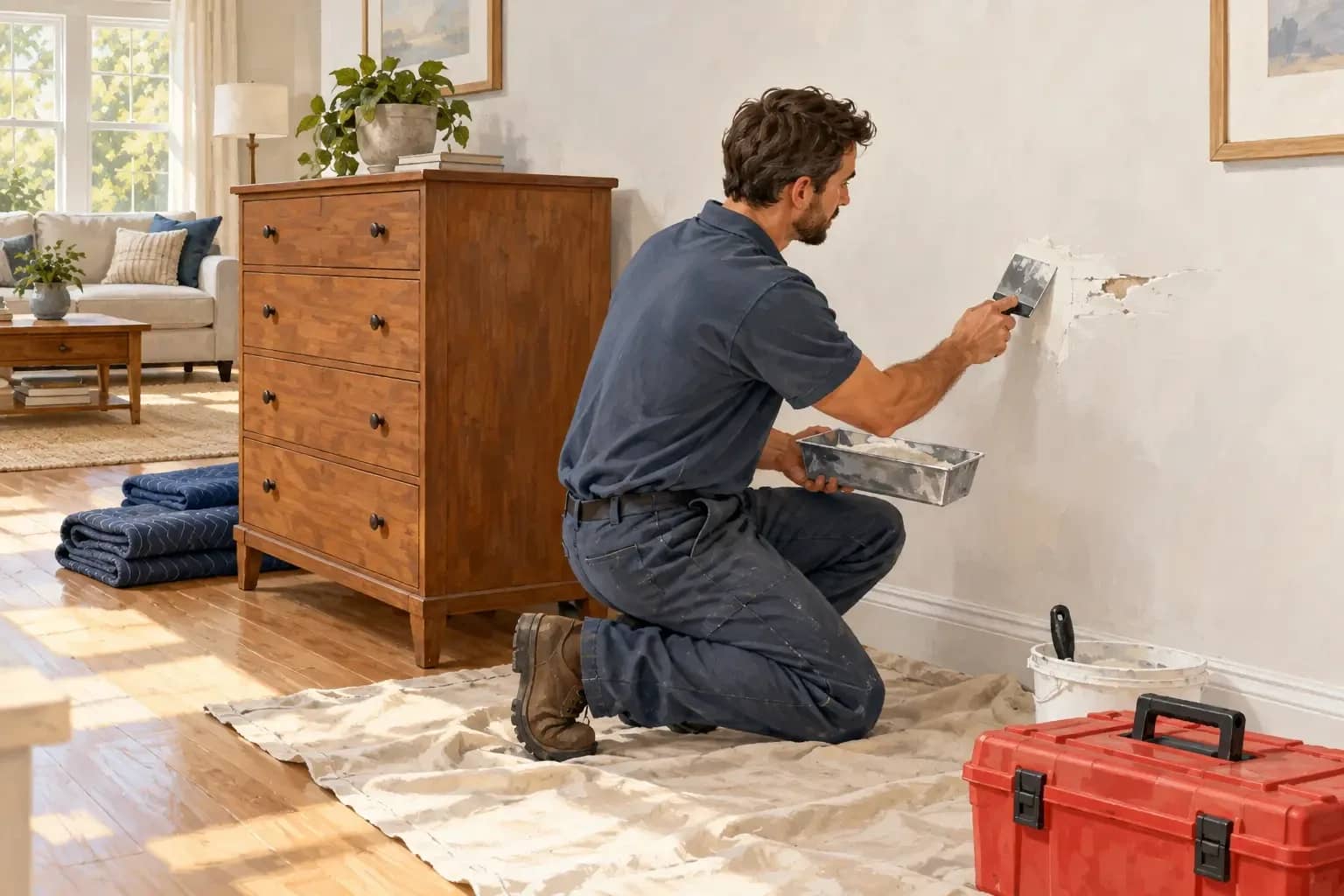
Wall Damage After Furniture Moves
Hallways lose every argument with a dresser. We rebuild the crushed corner first, then fill the gouges and patch whatever got punctured, so nothing shows through new paint.
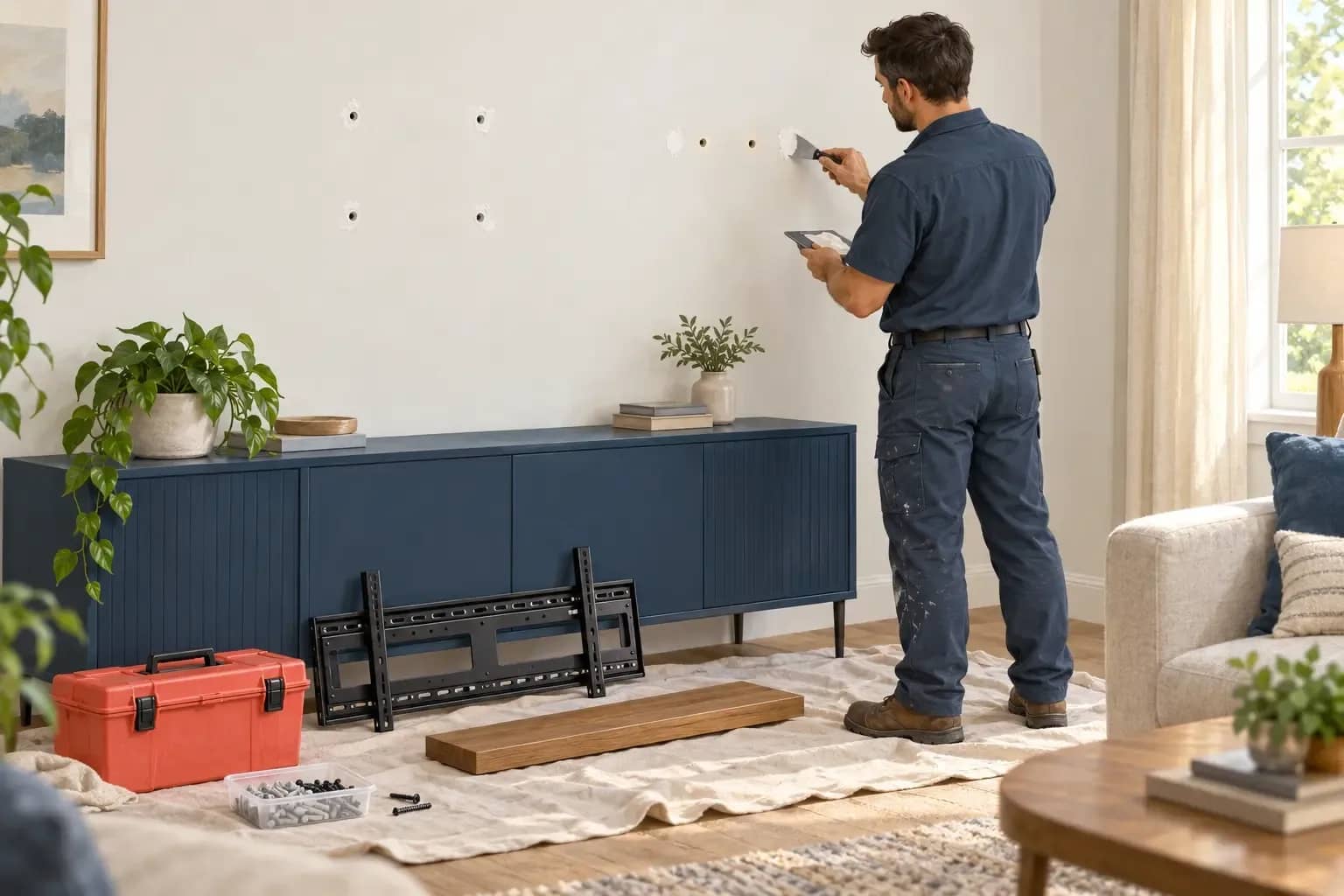
Repairs After Removing TV Mounts and Shelves
A removed mount leaves a cluster of lag-bolt or toggle holes, and shelves leave rows of anchors with torn paper. We pull the loose anchors, seal the paper, and blend texture across the old footprint. We can mount the TV in a new spot too.
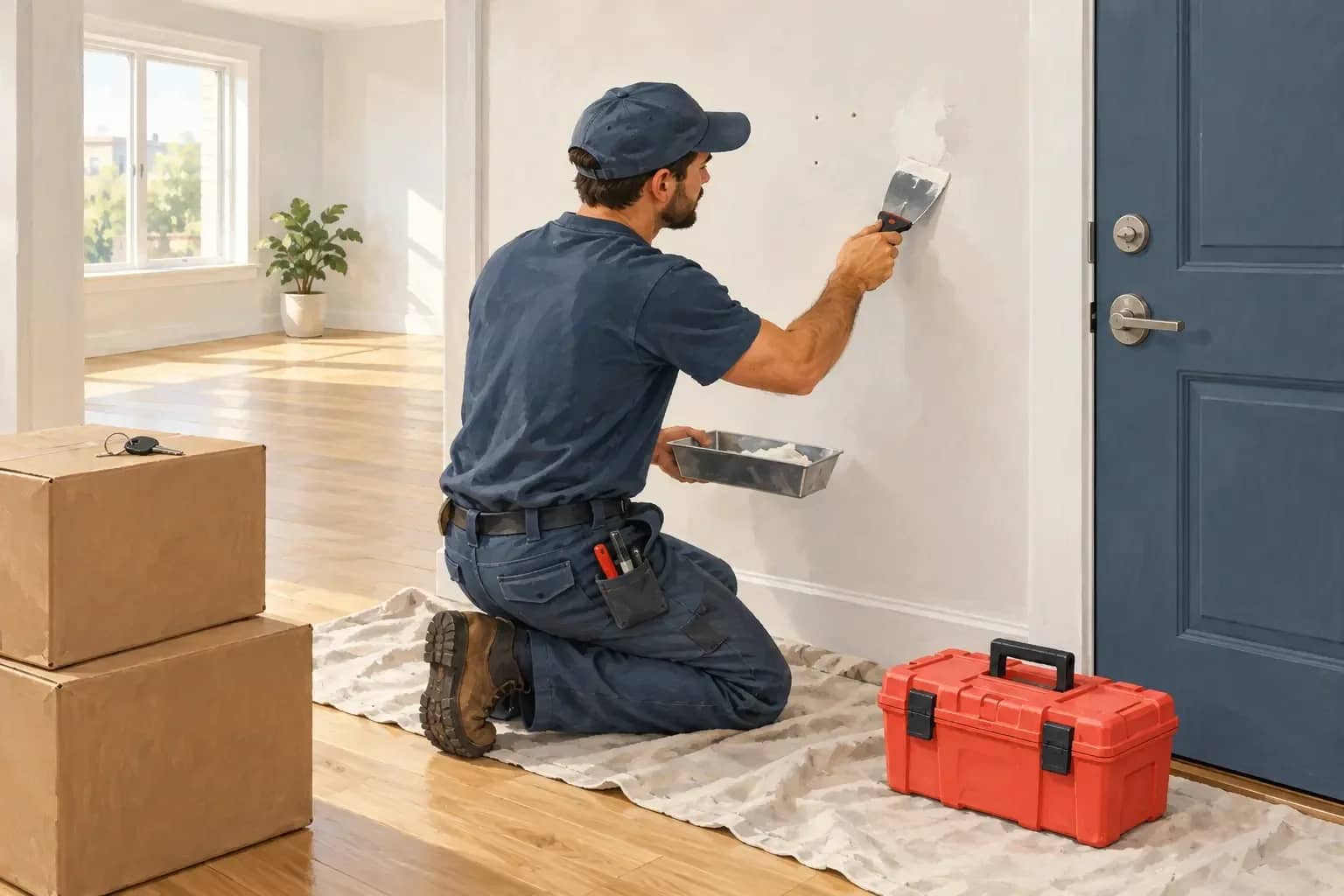
Rental Move-Out and Move-in Repairs
Tenants and landlords call before a walkthrough or a new lease about picture holes, anchor damage, and door-swing dents, in TCU-area houses and apartments along the Alliance corridor. List every spot, even the one behind the door.
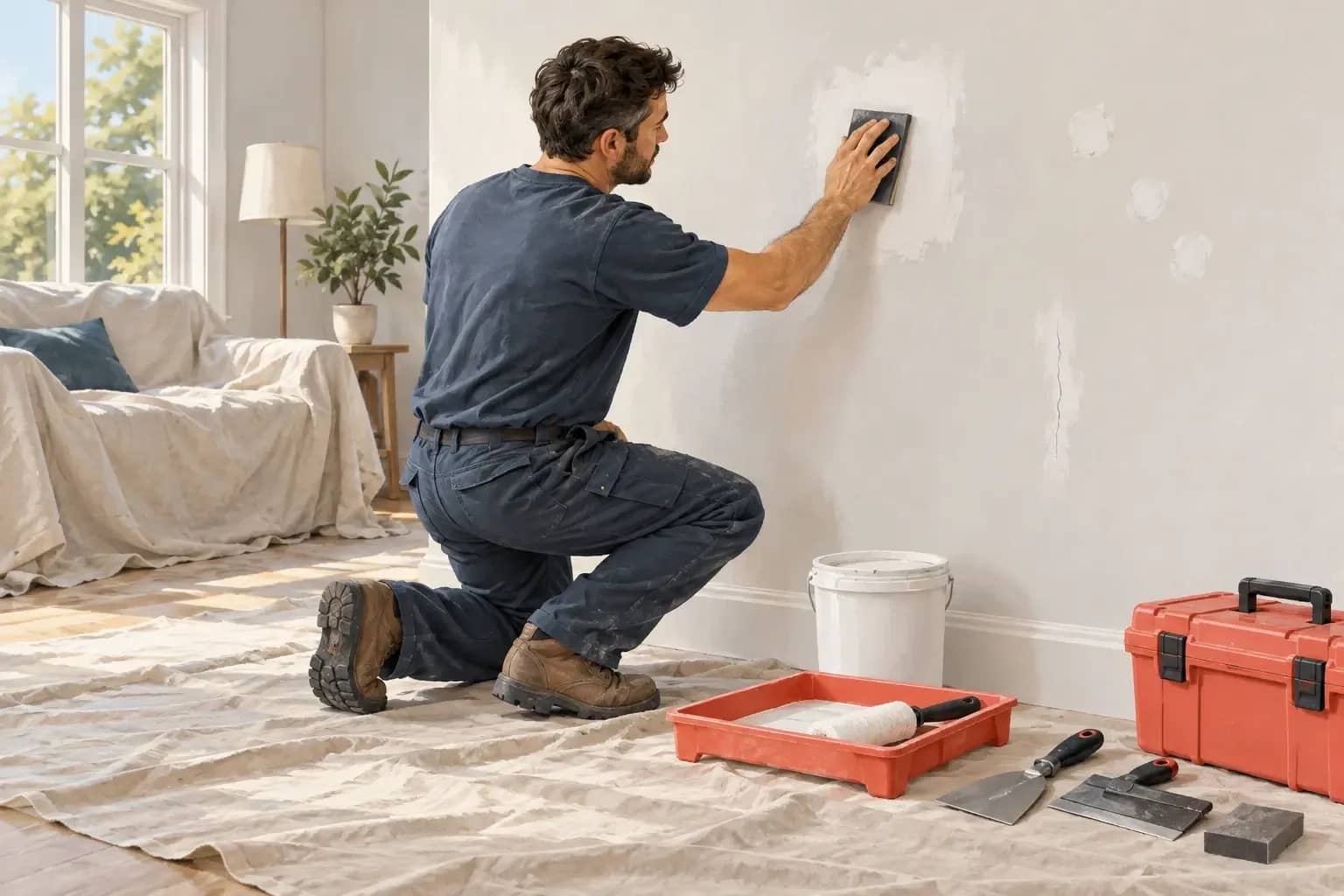
Damaged Walls Before Room Repainting
Fresh paint makes old dents, nail pops, and uneven patches easier to see, satin and semi-gloss most of all, and morning light finds every one. We level them first, so your painter or our interior painting service starts clean.
Drywall Hole Repair in Fort Worth
A doorknob hole and a nail hole are very different jobs. The right repair depends on the size of the hole and what caused it.
Nail, Screw, and Anchor Holes
Small holes from picture nails, screws, and plastic anchors are filled, leveled, and sanded flush. Anchors are pulled or set below the surface first, because an anchor that gets painted over stays visible as a bump. Popped nail heads are re-secured with a screw before filling, so they don't push back out.
Doorknob and Accidental Impact Holes
Doorknobs are repeat offenders: a hole at latch height gets hit again and again, and compound alone won't hold. It needs backing behind the opening, a drywall patch fastened to it, and taped seams. A door stop afterward keeps it from happening again.
Openings Left by Plumbing or Electrical Work
Plumbers and electricians cut an access opening to reach the pipes or wiring, and the wall usually stays open when they leave. Once their work is done, we close it with drywall cut to fit, fastened to framing or added backing, then taped and finished.
Holes From Removed Fixtures and Brackets
Towel bars, curtain rod brackets, old thermostats, wall-mounted lights: they all leave oversized toggle holes and torn paper behind. The paper is repaired first, then the hole is filled or patched and the texture blended until the old spot disappears under paint.
Damage That Isn’t a Hole
Cracks, dents, bent corners, torn paper, and water stains each need their own prep before any compound goes on.
North Texas clay soil swells when it's wet and shrinks when it dries, and slab foundations move with it through the seasons. That movement shows up as cracks along seams and at the corners of doors and windows. We open the crack, re-tape the joint, and refinish it. Filler alone usually splits again by the next dry spell.
A hard impact can crush the gypsum core even when the paper face looks intact. If the spot feels soft when you press it, that's what happened. The loose material gets cut out, the area is rebuilt on solid backing, and it's finished level with the wall.
A dented outside corner usually means the metal or vinyl bead under the compound has bent or pulled loose. We re-secure or replace it and recoat both sides until the edge runs straight again.
Pull off an adhesive hook, a mirror, wallpaper, or a backsplash and the face paper often comes with it, leaving a brown layer that bubbles the moment wet compound or paint touches it. That layer gets sealed before anything is skimmed over it, or the bubbles come back.
Roof leaks after hail and spring storms, overflowing AC drain lines from attic units, and plumbing leaks are the usual causes around here. Once the leak is fixed and the area is dry, we cut out the soft or stained drywall and replace it. If you suspect mold, or the damage is widespread, have a specialist look at it first.
Small Patches and Larger Drywall Repairs
A dent, a fist-sized hole, and a water-stained section each need a different method. We match the method to the damage instead of covering everything with compound.
From Photos to a Paint-Ready Wall
You see the scope and price before we start, and the wall ends up ready for primer and paint.
- 01
Share Damage Photos
Send a close-up of each damaged area and a wider photo of the whole wall. Rough dimensions, or a tape measure in the frame, are enough.
- 02
Confirm Repair Scope and Wall Texture
We tell you whether each area needs a fill, a supported patch, or a replaced section, confirm the texture to match, and give you a quote.
- 03
Patch and Finish the Damaged Area
We complete the repair, apply and sand the finish coats, and blend the texture into the surrounding wall.
- 04
Check the Surface and Confirm Readiness
We inspect the repair with you and tell you when the wall can be primed and painted.
Drywall Repair Across Fort Worth
HouseBench
Find us
TX 75067
Hours
Bookings open 24 hours a day, 7 days a week
From prewar houses near downtown to newer subdivisions on the north side, HouseBench repairs drywall across the city. The age of the home shapes the repair. The neighborhoods below are some of the areas we cover.
- Arlington Heights
- Berkeley Place
- Crawford Farms
- Fairmount
- Mistletoe Heights
- Monticello
- Oakhurst
- Park Glen
- Ridglea Hills
- Ridgmar
- Ryan Place
- Summerfields
- Tanglewood
- Wedgwood
- West Meadowbrook
- Westcliff

FAQs
Get a quoteYes. A close-up of each damaged area, a wider shot of the whole wall, and rough measurements are usually enough. If something's unclear, we'll ask for another angle or a measurement before we confirm the price.
Size, number of areas, repair method, the texture to match, and access all play in. A small fill costs less than a supported patch or a replaced section, and a ceiling, stairwell, or high wall takes more time than a spot at eye level.
In most cases, yes. Orange peel and knockdown can be blended closely by matching the size and density of the existing pattern. A very old, heavy, or hand-applied texture is harder to match exactly, and we'd rather say so up front. Painting the full wall afterward hides the transition best.
It depends on the board around the hole. If it's solid, a supported patch with backing works well. If the board is crushed, crumbling, or wet, or the damage runs across a wide area, replacing the section from stud to stud is the stronger repair.
Yes. New drywall on a wall that's still getting wet will stain and soften all over again, so have the roofer, plumber, or HVAC technician fix the source, give the area time to dry fully, and then schedule the wall repair.
Because the wall is still moving. Clay soil expands and contracts with moisture, and foundations shift slightly with it from season to season. Taping the joint holds far better than filler alone, but a crack that keeps widening, or comes with sticking doors, is a reason to have the foundation checked.
Only if it's listed on your quote. Otherwise the quote covers the repair through a sanded, paint-ready surface. Tell us your painting plans when you request a call, and we can quote touch-ups or interior painting alongside the repair.
A small patch is often ready for primer the day after its final coat. Standard joint compound needs about a day per coat, longer for deep fills or humid weather, so a multi-coat repair takes a few days from start to paint. Either way, the last coat has to be fully dry and sanded first.
Yes. Every technician is background checked, and completed work carries a 30-day warranty. Requests are open 24/7.